Hi Lovely Ladies!!
It's been a minute but I am back on this lovely Thursday with some information from the hair book that changed my thinking towards hair. The information in this post is from the book with some of my own thoughts based on experience with my own hair journey. I hope this information can help you get further with your healthy hair journeys!
What is Porosity?
"Porosity refers to the hair's ability, or inability, to absorb water o chemicals into the cortex." In Audrey Davis-Sivasothy's guide, The Science of Black Hair, she uses the illustration of a fence and weathering to better explain porosity. Sivasothy states that a new fence can protect one's yard from outside intrusion and disturbances but as the fence gets older and faces destructive elements it becomes open in some places or more porous and that protection is therefore compromised. Our hair grows from the root strong and protected by the cuticle layer, like that new fence, but as we style, handle our hair and our hair strands age those layers "crack, peel and lift away" therefore on one head each strand's porosity increases from root to end.
What is low porosity vs. high porosity?
Low porosity means that the hair strands do not absorb moisture immediately and resist chemical treatments such as relaxers or permanent hair coloring. This hair is considered quite healthy and has not yet been exposed to "cuticle-degrading treatments". With low porosity hair the cuticles of the strand(s) are tightly closed therefore protecting the cortex or center-most part of the strand.
Hair with higher porosity can absorb moisture a lot faster than hair with lower porosity. The cuticles easily lift to absorb that moisture but if the porosity of the hair is too high those cuticles will remain open, losing that moisture just as fast. Therefore hair that is super porous can be wet over and over again and not retain that moisture leaving the hair (once dried) hard, brittle and dry.
How does this information relate to Breakage/Damage?
On your head the part of your hair that would have the lowest porosity would be the hair freshly grown out of your scalp while the hair with the highest porosity would be your ends due to your ends being the oldest part of your hair. Many of us fight with dry brittle ends while the rest of out hair can retain moisture amazingly. Those dry, porous ends can make or break the health or our hair. This is why trimming/dusting our ends is so important. These dry, old ends can cause splits all the way up our hair shaft and definitely keep us from reaching our length goals.
The Wrap-up
For overall hair health where should your hair land on the porosity scale? Ideally we would want our hair to be at a happy medium between the two extremes. You want your hair to be able o absorb moisture well while having enough cuticle tightness to maintain that moisture leaving hair healthy, moisturized and giving us better manageability!
Did I miss anything? Have any questions? Leave a Comment!!!
Thanks for reading,
KoilyKute
UP NEXT: Dry Hair, Breakage/Damage & pH

Thursday, January 30, 2014

Friday, January 10, 2014
Why I LOVE Olive Oil as a sealant...

Olive oil has been the one oil that I started using from the beginning (2010). Before I even knew what a sealant really was, I decided that olive oil would be the first one I tried. I used olive oil for the first chapter of my hair journey figuring out how to seal in moisture, what the benefits of olive oil are, and how I could incorporate it into my journey for MY hair.
What is a sealant?
A sealant in natural hair terms can be an oil or butter that allows moisture to be sealed or absorbed into the hair strands without being lost as the hair dries completely. For 4C hair, in my experience, a sealant should be applied as the last step in the moisturizing process. Sealants are very important for our hair being that in most cases our hair has low porosity and as a result struggles to retain moisture. Once we find a great moisturizer we need a sealant that'll "lock it up" and keep that moisture right where we want it!
What are the benefits of olive oil?
The following information can be found on www.newhealthguide.org.
- Prevent DTH Hormones Production. A hormone called DTH is the culprit in many cases of hair loss, as it causes the hair follicle shaft to narrow. Olive oil actually stops this from happening, which means you can hold onto your hair for longer.
- Promote Scalp Health. Olive oil is loaded with antioxidants, which can keep the skin of your scalp in better shape. It can even reduce the damage done by hair care products or overuse of styling products.
- Naturally Condition the Hair. Olive oil can make your hair shiny and soft. That's why it has been used for centuries as a natural hair conditioner.
- Fight off Fungi and Bacteria. Dandruff, head lice and other adverse conditions can contribute to hair loss. Fortunately, olive oil fights off all of these things, helping keep your hair healthier.
- Improve Blood Circulation. Olive oil massages can improve the blood circulation in your scalp. This increased blood flow can stimulate the follicles, which then produce thicker strands.
Why Do I LOVE Olive Oil?
I have used Olive Oil as a sealant, in my deep conditioner mixes, in my pre poo, in my spray bottle...yes, just about everything! For MY hair specifically I've gone without olive oil and I have noticed the difference! My hair is so much softer, shinier and moisturized when I seal with olive oil. It is a staple that I will NEVER stray from again. You just gotta love when the simple things WORK, right?
What kind of Olive Oil do I purchase?
I have no brand preference really but it has to be Extra Virgin Olive Oil and if it's USDA Organic, that makes it even better.
The Wrap-Up
Olive Oil is a MUST Ladies!! The benefits that can come from the use of EVOO are endless. If you haven't tried Olive Oil in your journey, what the heck are you waiting for, Lady? Hop on that! LOL.
As always remember to enjoy your hair and your journey!
Stay Koily and Kute ;-)
Sunday, January 5, 2014
Pregnancy, Natural Hair Growth And Growth Retention
Hi Ladies!!

 My first pregnancy marked the beginning or the first chapter of my natural hair journey. For MY type 4 blend hair I realized after error that I needed to do the LCO method which I have blogged about before. That is the way I became consistent in seeing the proof of my hair growth. The pictures shown are the progress I made from prenatal to post natal. (2 1/2 years of growth)
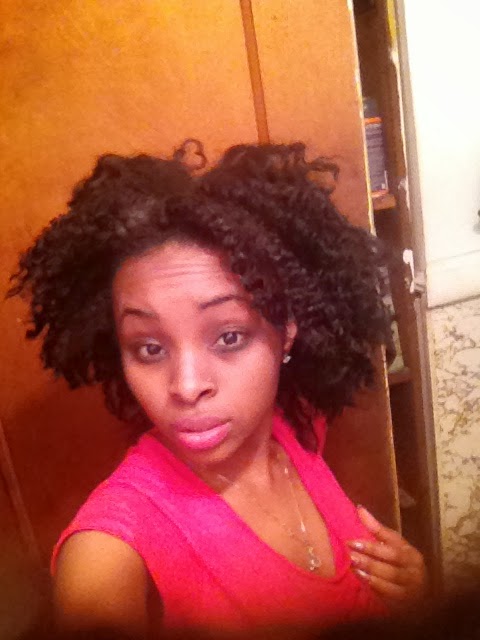
Now that I am pregnant with my second child and on the second chapter of my natural hair journey I am looking to retain as much length (growth) as possible by protecting my hair and keeping my naturally dry type 4 blend hair as moisturized as possible by sealing my ends and wearing protective styles. As for the hair loss that I could possibly run in with after having my baby I'll do the black tea rinses as I did before. Here are some examples of the protective styles I have done so far. (1) Finger Coils (2) Two Strand Twists
(3) Marley Braid Twisted Updo


The Wrap-Up
Whether pregnant or not our natural hair needs TLC and through research we learn how to provide the best TLC for OUR hair. Through my experiences I've learned that when anything hormonal happens in the body our hair needs more attention and care to maintain the health that we might otherwise lose by neglecting or doing the bare minimum for our hair. At the end of the day, love you hair and it'll love you back!
Hope You all Have a Blessed One!
Stay Koily and Kute!
Happy Sunday to you all!! This post is strictly about my experience during this, my second pregnancy, and my hair growth.
Now, with my first pregnancy my hair grew rapidly which I expected with the hormonal changes and the prenatal vitamins I was taking, however I had not yet gone in depth with research and didn't know how to properly take care of or protect my hair. That, I realized is the difference not just during pregnancy but during out journeys. Your hair grows all the time. The difference between noticing that hair growth and having no visual proof of growth is how you care for and protect you hair from roots to ends.
My Personal Experience
My first pregnancy marked the beginning or the first chapter of my natural hair journey. For MY type 4 blend hair I realized after error that I needed to do the LCO method which I have blogged about before. That is the way I became consistent in seeing the proof of my hair growth. The pictures shown are the progress I made from prenatal to post natal. (2 1/2 years of growth)
The one thing that I did not calculate was the postnatal hair shedding I would experience! Postnatal shedding is the accelerated shedding of a mother's hair three to six months after giving birth. It has been said that some women experience this hair loss in CLUMPS!! Yes I said clumps! But, thankfully my shedding wasn't as bad as it could have been. At times I did have a hand full of shed hair but it was not in clumps whatsoever. To prevent a crazy amount of shedding I did two black tea rinses in a time span of 4 months. Needless to say, the potential issue I could have had with hair loss was evaded.
Now that I am pregnant with my second child and on the second chapter of my natural hair journey I am looking to retain as much length (growth) as possible by protecting my hair and keeping my naturally dry type 4 blend hair as moisturized as possible by sealing my ends and wearing protective styles. As for the hair loss that I could possibly run in with after having my baby I'll do the black tea rinses as I did before. Here are some examples of the protective styles I have done so far. (1) Finger Coils (2) Two Strand Twists
(3) Marley Braid Twisted Updo
The Wrap-Up
Whether pregnant or not our natural hair needs TLC and through research we learn how to provide the best TLC for OUR hair. Through my experiences I've learned that when anything hormonal happens in the body our hair needs more attention and care to maintain the health that we might otherwise lose by neglecting or doing the bare minimum for our hair. At the end of the day, love you hair and it'll love you back!
Hope You all Have a Blessed One!
Stay Koily and Kute!
Subscribe to:
Posts (Atom)